
Hip Pain While Walking or Climbing Stairs: Causes and Treatment Options
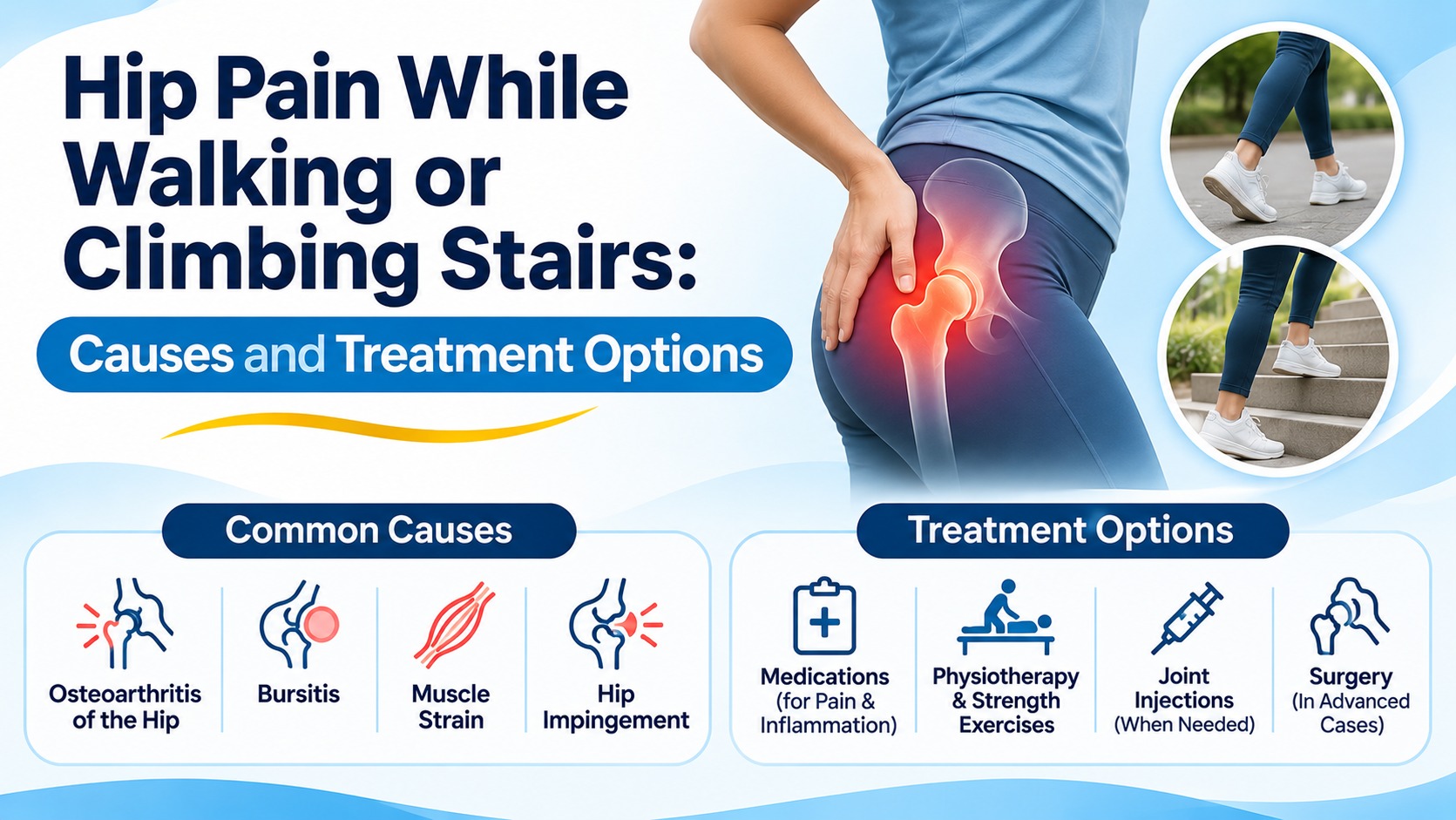
Hip pain can make everyday activities such as walking, climbing stairs, getting out of a chair or putting on footwear uncomfortable. Some people experience pain around the groin, while others notice discomfort along the outer hip, buttock or upper thigh.
The hip is a major weight-bearing joint that supports body movement and helps maintain balance. Pain in this area can develop due to joint problems, cartilage damage, muscle conditions, injuries or changes in the surrounding soft tissues.
Occasional discomfort may settle with appropriate rest, but persistent or worsening pain should not be ignored. Understanding the possible causes can help you recognise when to consult an orthopedic specialist in Pune.
Understanding the Hip Joint
The hip is a ball-and-socket joint formed by the head of the thighbone (femur) and the socket of the pelvis (acetabulum).
The joint is supported by cartilage, ligaments, tendons and surrounding muscles. These structures work together to allow movements such as walking, bending, sitting and rotating the leg.
When the joint or surrounding tissues become damaged or inflamed, movement may become painful or restricted.
Common Causes of Hip Pain
Hip pain can occur for several reasons. The location of discomfort and the activities that trigger it may help guide the medical assessment.
1. Hip Osteoarthritis
Osteoarthritis is a condition in which the protective cartilage within a joint gradually wears down.
When the hip is affected, a person may experience:
Pain around the groin or upper thigh.
Stiffness after sitting or resting.
Discomfort while walking.
Difficulty putting on shoes or socks.
Reduced hip movement.
Symptoms may develop gradually and become more noticeable during weight-bearing activities.
2. Avascular Necrosis of the Hip
Avascular necrosis (AVN) occurs when the blood supply to part of the bone is reduced, potentially leading to bone damage.
It commonly affects the femoral head, which forms the ball of the hip joint.
Possible symptoms include groin pain, discomfort while walking and gradually increasing difficulty with movement. In early stages, symptoms may be mild or absent.
Early assessment is important because treatment options can vary according to the stage of the condition.
3. Hip Bursitis
Bursae are small fluid-filled sacs that help reduce friction between bones, tendons and muscles.
Inflammation of the bursa near the outer hip may cause pain and tenderness. Discomfort can become more noticeable when lying on the affected side, walking for long periods or climbing stairs.
4. Muscle and Tendon Injuries
Muscle strains and tendon problems around the hip may develop after exercise, sudden movements, overuse or changes in physical activity.
Pain may become more noticeable during specific movements, stretching or muscle contraction.
5. Hip Labral Injury
The labrum is a ring of cartilage that surrounds the hip socket and helps support joint stability.
A labral injury may cause groin pain, clicking, catching or discomfort during certain movements. Diagnosis may require a combination of physical examination and imaging.
6. Hip Fractures and Injuries
A fall, accident or direct impact can cause a hip fracture or other injury.
Older adults may be particularly vulnerable to fractures following a fall, especially when bone strength is reduced.
Sudden hip pain after an injury, inability to stand or bear weight, or visible deformity requires urgent medical attention.
Why Does Hip Pain Increase While Walking or Climbing Stairs?
Walking and climbing stairs place repeated loads on the hip joint and surrounding muscles.
When the joint is affected by arthritis, AVN, inflammation or an injury, these movements may increase discomfort.
Different symptoms can provide useful clues:
Pain in the groin: May be associated with problems inside the hip joint.
Pain on the outer hip: May involve the surrounding tendons or bursae.
Pain in the buttock: May originate from the hip, lower back or nearby structures.
Stiffness after sitting: Can occur with joint conditions such as osteoarthritis.
Pain during weight-bearing: May indicate a joint or bone-related problem.
These patterns are not sufficient to establish a diagnosis. A clinical assessment is needed to identify the underlying cause.
How Is Hip Pain Diagnosed?
The diagnostic process begins with understanding the patient's symptoms and examining hip movement.
1. Medical history
The orthopedic specialist may ask when the pain started, where it is located, whether there was an injury and which activities make it worse.
Previous medical conditions, medication history and activity levels may also be relevant.
2. Physical examination
The doctor may assess walking pattern, hip movement, joint tenderness, muscle strength and flexibility.
Examination of the lower back and surrounding joints may also be necessary because pain can sometimes originate outside the hip.
3. X-ray
An X-ray can help identify changes in joint space, bone structure, arthritis and certain fractures.
4. MRI
An MRI may be recommended when further assessment of soft tissues, bone changes, AVN or other conditions is needed.
The choice of investigation depends on the symptoms and examination findings.
What Are the Treatment Options for Hip Pain?
Treatment depends on the underlying diagnosis, severity of symptoms, joint condition and the patient's daily activity requirements.
1. Activity modification
Temporary changes to activities that aggravate pain may help reduce discomfort. This may include limiting high-impact exercise or avoiding repeated movements that cause significant pain.
Complete inactivity is not appropriate for every condition, so activity advice should be individualised.
2. Medication
A doctor may recommend pain-relief or anti-inflammatory medication where appropriate. The choice depends on medical history, other medicines and potential side effects.
3. Physiotherapy
Physiotherapy may help improve hip mobility, muscle strength, balance and movement patterns.
A rehabilitation programme may include targeted exercises for the hip and surrounding muscles, depending on the diagnosis.
4. Image-guided injections
In selected conditions, a specialist may consider an injection to help manage symptoms. The suitability and expected benefit depend on the underlying problem.
Injections are not appropriate for every type of hip pain and should only be considered after assessment.
5. Hip Preservation Procedures
Some patients may be suitable for procedures intended to preserve the natural hip joint, depending on the diagnosis and stage of damage.
For example, selected patients with early-stage AVN may be assessed for joint-preserving options. Suitability varies and requires detailed evaluation.
6. Total Hip Replacement
When severe arthritis or advanced joint damage causes persistent pain and limits daily activities, total hip replacement may be considered.
During this procedure, damaged joint surfaces are replaced with artificial components.
The decision is based on symptoms, examination, imaging, overall health and the response to non-surgical treatment. Hip replacement is not necessary for every person with hip pain.
Dr. Harshal V. Kalambe Patil provides hip replacement and orthopedic care at Osteon Orthopedic Hospital, Pimple Saudagar, Pune.
How Can You Manage Hip Discomfort in Everyday Life?
Some practical measures may help reduce unnecessary strain while the underlying condition is being assessed.
Avoid repeatedly performing movements that trigger significant pain.
Use supportive footwear when walking.
Follow the exercise plan recommended by your physiotherapist.
Avoid starting intense workouts without appropriate guidance.
Maintain a comfortable sitting position.
Use walking support if advised by your healthcare professional.
Do not continue exercising through severe or increasing pain. Sudden hip pain after a fall or an inability to bear weight should be assessed urgently.
When Should You Consult an Orthopedic Specialist?
Arrange an orthopedic consultation if you experience:
Hip pain that continues for several days or keeps returning.
Difficulty walking or climbing stairs.
Persistent groin or outer hip pain.
Stiffness that affects daily activities.
Reduced hip movement.
Pain that interrupts sleep.
Discomfort that does not improve with appropriate initial care.
Seek urgent medical attention after a significant injury, particularly if you cannot stand or bear weight.
If you are looking for hip pain treatment in Pune, an orthopedic assessment can help determine the cause and identify suitable treatment options.
Frequently Asked Questions
1. Why does my hip hurt when I walk?
Hip pain while walking may be associated with osteoarthritis, AVN, tendon problems, bursitis or an injury. A clinical examination can help identify the cause.
2. Is hip pain always a sign of arthritis?
No. Hip pain can develop due to several conditions affecting the joint, muscles, tendons, bursae or surrounding structures.
3. Can hip pain improve without surgery?
Yes. Many hip conditions can initially be managed through activity modification, medication and physiotherapy. Surgery may be considered when the underlying condition is advanced or symptoms remain significant.
4. When is hip replacement recommended?
Hip replacement may be considered when severe joint damage causes persistent pain and limits daily activities despite appropriate non-surgical treatment.
5. Which doctor should I consult for persistent hip pain in Pune?
An orthopedic specialist can examine the hip, recommend appropriate investigations and discuss treatment options based on the diagnosis.
Conclusion
Hip pain while walking or climbing stairs can result from osteoarthritis, AVN, bursitis, muscle injuries and other joint-related conditions. The location and nature of pain may provide useful clues, but an accurate diagnosis requires clinical evaluation.
Treatment may include activity modification, medication, physiotherapy, selected procedures or hip replacement in appropriate cases.
Experiencing persistent hip pain or difficulty walking? Consult Dr. Harshal V. Kalambe Patil at Osteon Orthopedic Hospital, Pimple Saudagar, Pune, to understand the cause of your discomfort and explore suitable treatment options.