
Hearing the "Pop": Do All ACL Tears Actually Require Surgery?
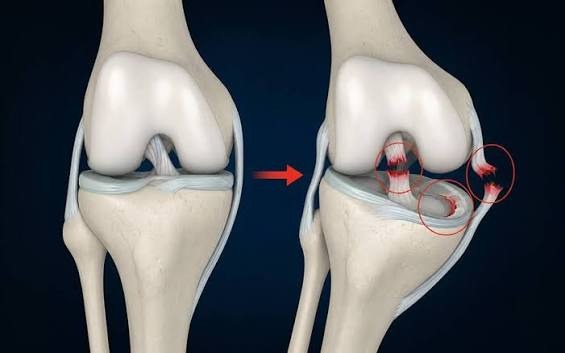
You are playing a weekend football match, going for a quick pivot, or landing awkwardly from a jump. Suddenly, you hear and feel a distinct "pop" in your knee, followed by immediate pain and swelling. It is one of the most common and feared sports injuries: an Anterior Cruciate Ligament (ACL) tear.
Hearing that pop can be terrifying, but not every ligament injury means the end of your active lifestyle. The biggest question most patients have after the initial shock wears off is whether they absolutely need to go under the knife. So, how do you decide between conservative care and arthroscopic ACL reconstruction
Here is a comprehensive guide to understanding your ACL injury and determining the best path to recovery.
Recognizing the Symptoms of a Torn ACL
The ACL is one of the key ligaments that help stabilize your knee joint. It connects your thighbone (femur) to your shinbone (tibia) and prevents the shinbone from sliding too far forward. When this ligament tears, the knee loses its primary mechanical stabilizer.
While a doctor's physical examination and an MRI are required for an official diagnosis, the immediate symptoms are usually very distinct:
Immediate Swelling and Instability
Unlike some injuries where the swelling creeps up the next day, an ACL tear usually causes rapid, significant swelling within the first two to six hours. This is accompanied by a severe feeling of instability many patients report feeling as though their knee is "giving out" or buckling underneath them when they try to put weight on it.
Loss of Range of Motion
Due to the rapid swelling and pain, you will likely find it very difficult to bend or fully straighten your knee. Walking becomes painful and mechanical, often requiring crutches to get around safely.
When is Conservative Treatment Enough?
It is a common myth that every single ACL tear requires surgery. The truth is, the ACL does not heal on its own because it lacks a robust blood supply, but not every patient actually needs an intact ACL for their daily life.
Conservative treatment which relies heavily on intensive physical therapy, bracing, and lifestyle modifications might be the right choice if:
You have a partial tear rather than a complete rupture.
You are older or lead a relatively sedentary lifestyle.
You do not participate in sports that require jumping, pivoting, or sudden changes of direction (like running in a straight line or cycling, which are generally safe without an ACL).
Your physical therapy successfully strengthens your quadriceps and hamstrings enough to compensate for the missing ligament (patients who achieve this are clinically referred to as "copers").
Why Active Individuals Usually Need ACL Surgery
While conservative treatment works for some, surgical reconstruction is highly recommended for athletes, young patients, and anyone with a highly active lifestyle or physically demanding job. Here is why skipping surgery can be risky for active individuals:
Returning to High-Impact Sports
If your goal is to return to sports like football, basketball, tennis, or skiing, you need an ACL. These activities require sudden decelerations, cutting maneuvers, and pivoting. Without the ACL to stabilize the joint during these movements, your knee is highly likely to give out again.
Preventing Further Knee Damage
This is perhaps the most critical reason for surgery. Every time an unstable knee buckles or gives way, the bones grind improperly against each other. This abnormal movement can easily crush the meniscus (the shock-absorbing cartilage in your knee) and damage the smooth articular cartilage covering the bones. Leaving an ACL tear untreated in an active person often leads to secondary meniscal tears and early-onset osteoarthritis.
The Benefits of Keyhole (Arthroscopic) Surgery
If surgery is the right path for you, the good news is that modern ACL reconstruction is highly advanced. Rather than large, open incisions, surgeons now use arthroscopy a minimally invasive "keyhole" technique.
During arthroscopic ACL reconstruction, the surgeon makes tiny incisions to insert a miniature camera (arthroscope) and specialized surgical tools. The torn ligament is removed and replaced with a graft (usually a tendon taken from another part of your knee or a donor).
Because arthroscopy is minimally invasive, it results in smaller scars, less pain, a lower risk of infection, and a much smoother early recovery phase, allowing you to begin your rehabilitation exercises sooner.
Get the Right Treatment for Your Knee
Dealing with a nagging sports injury or chronic knee instability? Don't let an untreated ligament tear compromise your joint health. Getting a precise diagnosis and a personalized treatment plan is the first step toward getting back to the activities you love.
Whether you need guided conservative care or advanced minimally invasive surgery, expert help is available. Book a Consultation with Dr. Harshal V Kalambe Patil at Osteon Orthopedic Hospital in Pune today to find your fastest path to recovery.