
Meniscus Tear: Symptoms, Causes, Diagnosis and Treatment Options
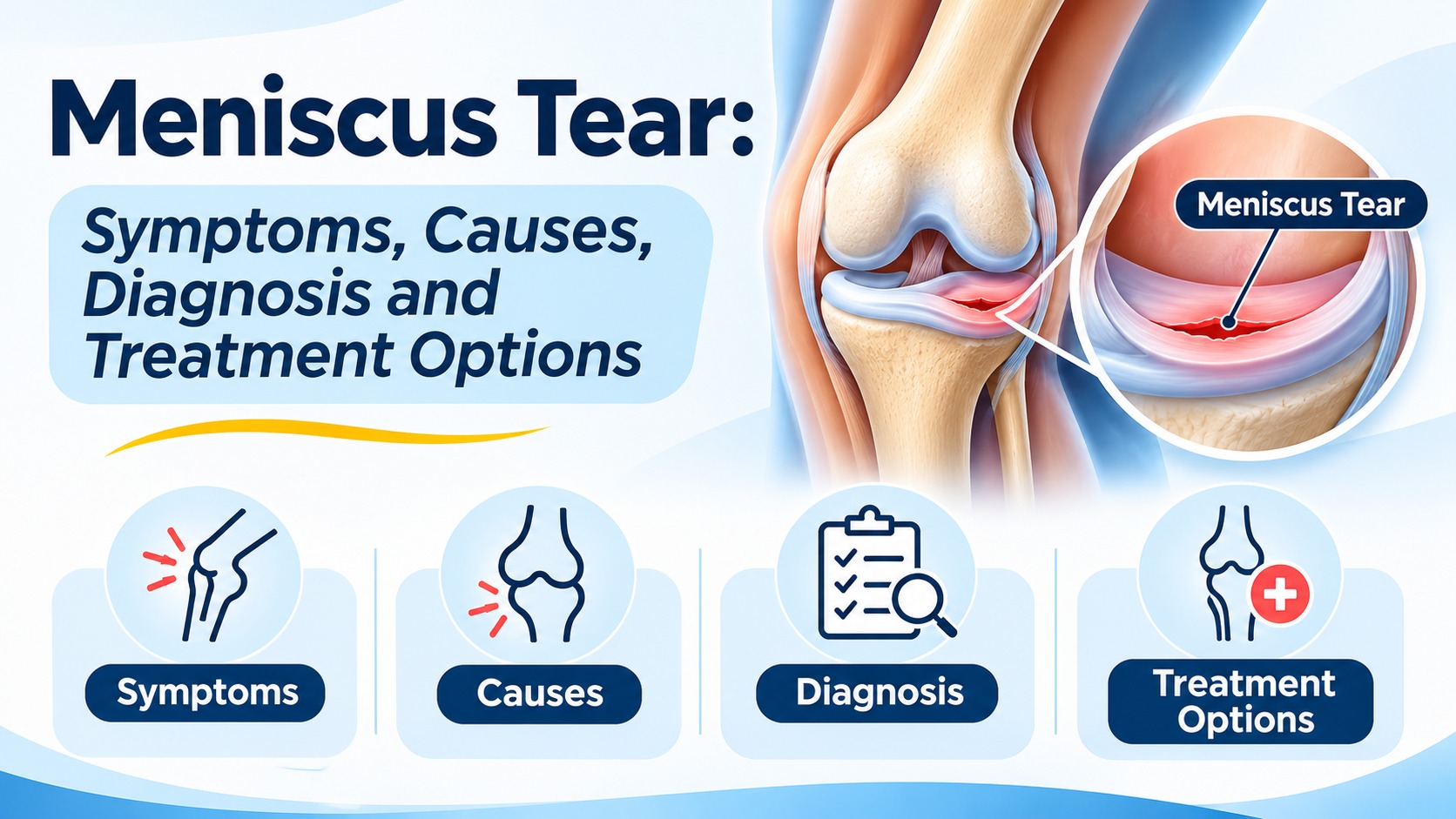
Knee pain after twisting your leg, playing sports, or suddenly changing direction may sometimes indicate an injury to the meniscus. The meniscus is a C-shaped piece of cartilage inside the knee joint that helps absorb shock, distribute body weight and provide stability during movement.
A meniscus tear is a common knee injury that can affect athletes, physically active individuals and older adults. Some people experience sudden pain and swelling, while others develop symptoms gradually due to age-related changes in the cartilage.
Understanding the symptoms and available treatment options can help you decide when to seek medical evaluation. If you are experiencing persistent knee pain, consulting an orthopedic specialist in Pune can help identify the cause and determine an appropriate treatment plan.
What Is a Meniscus Tear?
Each knee contains two menisci: the medial meniscus on the inner side and the lateral meniscus on the outer side.
These cartilage structures act as cushions between the thighbone (femur) and shinbone (tibia). They help distribute pressure across the knee and support smooth joint movement.
A meniscus tear occurs when this cartilage becomes damaged. The injury may involve a small tear or a more complex pattern depending on the force, location and condition of the tissue.
Meniscus injuries can occur independently or alongside other knee injuries, including ligament damage.
What Causes a Meniscus Tear?
Meniscus tears can develop due to sudden injury or gradual degeneration.
1. Sudden twisting movements
A meniscus tear may occur when the foot remains planted while the knee twists during movement. This can happen during football, cricket, badminton, basketball or other sports involving sudden turns.
2. Sports-related injuries
Athletes may experience meniscus injuries during jumping, pivoting, squatting or sudden changes in direction. Contact injuries can also affect the knee cartilage.
3. Age-related cartilage changes
As people get older, the meniscus may become less flexible and more vulnerable to damage. A tear can sometimes occur during ordinary activities such as getting up from a chair or squatting.
4. Repeated knee stress
Activities involving frequent deep squatting, kneeling or heavy physical loading may contribute to knee discomfort and injury, particularly when combined with existing cartilage degeneration.
What Are the Common Symptoms of a Meniscus Tear?
Symptoms vary depending on the type and severity of the injury.
Knee pain
Pain may develop along the inner or outer joint line. It can become more noticeable while twisting, squatting, climbing stairs or bending the knee.
Swelling and stiffness
Swelling may develop within hours or over the following days. Some individuals experience stiffness that makes bending or straightening the knee uncomfortable.
Locking sensation
A person may feel that the knee gets stuck during movement or cannot fully straighten. This can sometimes occur when a displaced portion of the meniscus interferes with joint movement.
Clicking or catching
Some people experience clicking, catching or an uncomfortable sensation while moving the knee. However, clicking alone does not confirm a meniscus tear.
Difficulty bearing weight
Pain and swelling may make walking, standing for extended periods or participating in sports difficult.
If you experience severe pain, significant swelling, inability to bear weight or a locked knee, seek medical evaluation promptly.
How Is a Meniscus Tear Diagnosed?
An accurate diagnosis is important because knee pain can have several possible causes.
An orthopedic specialist may use the following assessment methods:
1. Medical history
The doctor may ask how the injury occurred, when the pain started, which movements make it worse and whether you have experienced previous knee problems.
2. Physical examination
The knee is examined for swelling, tenderness, range of motion and joint stability. Specific clinical tests may help identify signs of meniscus injury.
3. X-ray examination
An X-ray does not usually show the meniscus itself, but it can help assess bone alignment and identify other conditions, such as osteoarthritis or fractures.
4. MRI scan
An MRI may be recommended when a meniscus injury is suspected. It can provide detailed images of the meniscus, ligaments and other soft tissues inside the knee.
The need for imaging depends on the examination findings and the patient's symptoms.
What Are the Treatment Options for a Meniscus Tear?
Not every meniscus tear requires surgery. Treatment depends on the tear pattern, location, symptoms, age, activity level and presence of other knee conditions.
1. Rest and activity modification
Reducing activities that aggravate pain may help during the initial recovery period. High-impact exercise, deep squatting and twisting movements may need temporary modification.
2. Ice and swelling management
Applying an ice pack wrapped in a towel for short intervals may help manage swelling and discomfort. Avoid placing ice directly against the skin.
3. Medication
A doctor may recommend suitable pain-relief or anti-inflammatory medication depending on the patient's medical history and individual needs. Medicines should be taken according to medical advice.
4. Physiotherapy and rehabilitation
A structured physiotherapy programme may focus on improving knee movement, strengthening the quadriceps and surrounding muscles, and restoring balance and stability.
Rehabilitation is important whether treatment is surgical or non-surgical.
5. Meniscus repair surgery
In selected cases, the surgeon may recommend meniscus repair to preserve the damaged cartilage. Repair is more suitable for certain tear patterns and locations where the tissue has a better chance of healing.
6. Partial meniscectomy
If a tear cannot be repaired and continues to cause significant symptoms, a surgeon may consider removing only the unstable damaged portion of the meniscus.
The decision depends on the individual injury. Preserving as much healthy meniscal tissue as possible is generally an important treatment consideration.
What Is Arthroscopic Meniscus Surgery?
Arthroscopy is a minimally invasive surgical technique in which a small camera and specialised instruments are introduced through small incisions around the knee.
The surgeon examines the joint and performs the required procedure, such as meniscus repair or removal of an unstable damaged portion.
The exact procedure depends on the tear and associated injuries.
Dr. Harshal V. Kalambe Patil provides arthroscopic knee surgery services at Osteon Orthopedic Hospital, Pimple Saudagar, Pune.
How Long Does Recovery Take?
Recovery varies according to the type of tear and treatment performed.
People managed without surgery may gradually return to normal activities as pain, swelling and movement improve.
After meniscus repair, weight-bearing and knee movement may need to be restricted for a period to protect the repair. Rehabilitation generally takes longer than after a partial meniscectomy.
Returning to sports should depend on strength, stability, movement and medical clearance rather than a fixed timeline.
Following the recommended rehabilitation plan can support a safer return to everyday activities.
When Should You Consult an Orthopedic Specialist?
Consider an orthopedic consultation if you experience:
Persistent knee pain after a twisting injury.
Repeated swelling around the knee.
Difficulty bending or straightening the knee.
Catching or locking sensations.
Pain that affects walking or climbing stairs.
Repeated knee instability during physical activity.
Early assessment can help identify the injury and avoid continuing activities that may aggravate symptoms.
If you are looking for meniscus tear treatment in Pune, an orthopedic consultation can help you understand whether conservative care, rehabilitation or surgery may be appropriate.
Frequently Asked Questions
1. Can a meniscus tear heal without surgery?
Some meniscus tears, particularly selected stable tears and degenerative injuries, may improve with activity modification and physiotherapy. Others may require surgery depending on symptoms and tear characteristics.
2. Can I walk with a meniscus tear?
Some people can walk with a meniscus tear, although pain and swelling may make movement uncomfortable. A locked knee or inability to bear weight requires prompt assessment.
3. Is MRI necessary to diagnose a meniscus tear?
An MRI can help assess the meniscus and surrounding soft tissues. However, the decision to perform an MRI depends on clinical examination and the suspected injury.
4. Does every meniscus tear require arthroscopic surgery?
No. Many meniscus injuries can initially be managed without surgery. Arthroscopy may be considered when symptoms persist or the tear pattern requires surgical treatment.
5. Can I return to sports after a meniscus injury?
Many individuals return to sports after appropriate treatment and rehabilitation. The timing depends on healing, strength, knee stability and medical clearance.
Conclusion
A meniscus tear can cause knee pain, swelling, stiffness and difficulty with everyday activities. The injury may result from sudden twisting movements, sports activities or age-related cartilage changes.
Treatment ranges from activity modification and physiotherapy to arthroscopic meniscus repair or partial meniscectomy in selected cases. Early diagnosis and an appropriate rehabilitation plan can help support knee function.
Experiencing persistent knee pain or difficulty bending your knee? Consult Dr. Harshal V. Kalambe Patil at Osteon Orthopedic Hospital, Pimple Saudagar, Pune, to understand your condition and explore suitable treatment options.